

Getting started with kbagent
Install the kbagent CLI, connect a Keboola project (single, multi-project, or a whole organization), verify with kbagent doctor, and run your first commands.
Install kbagent, connect it to a project, and run your first commands. This takes a couple of minutes.
Install
Section titled “Install”The recommended install is the prebuilt wheel via the install script:
curl -LsSf https://raw.githubusercontent.com/keboola/cli/main/install.sh | shOr install from source with uv (auto-updates, version-pinnable):
uv tool install "git+https://github.com/keboola/cli"Check the version:
$ kbagent --versionkbagent v0.66.0Connect a project
Section titled “Connect a project”How you authenticate depends on how much you want to manage.
A single project — use a Storage API token:
kbagent project add --project prod \ --url https://connection.keboola.com --token YOUR_TOKENA whole organization — use a Manage API token (org admin). kbagent registers every project and mints per-project tokens:
KBC_MANAGE_API_TOKEN=xxx kbagent --allow-env-manage-token \ org setup --org-id 123 --url https://connection.keboola.com --yesVerify with doctor
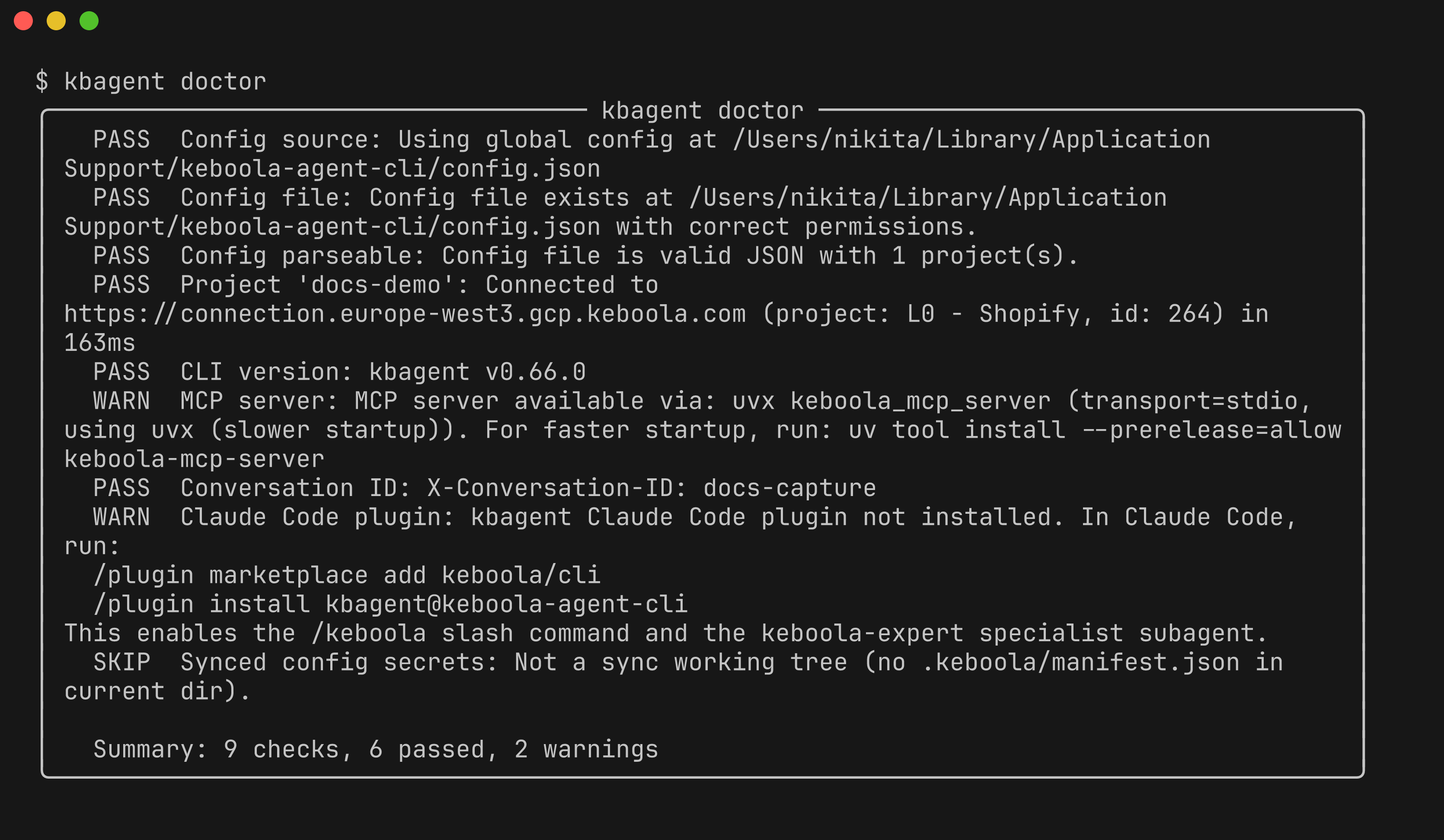
Section titled “Verify with doctor”kbagent doctor runs health checks on your configuration and connectivity. Once a project is connected it confirms the link and flags anything still worth doing:
Run your first commands
Section titled “Run your first commands”Once a project is connected, explore it. Add --json / -j for machine-readable output (what an agent uses):
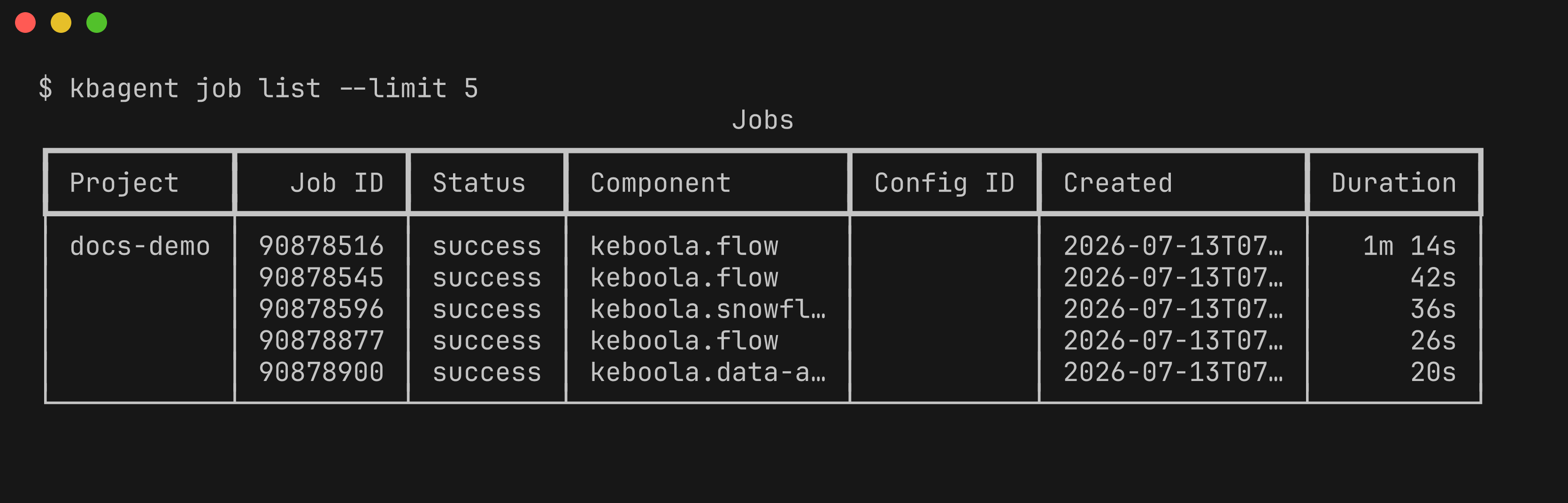
kbagent job list --limit 5 # recent jobs (shown above)Other everyday reads:
kbagent project list # connected projectskbagent config list # configurations in the default projectkbagent search "shopify" --search-type config-based # find configs by name/contentSet a conversation ID (for agents)
Section titled “Set a conversation ID (for agents)”When an AI agent drives kbagent, set a conversation ID so platform observability can correlate the session — every request then carries an X-Conversation-ID header:
export KBAGENT_CONVERSATION_ID="<unique-id>"Next steps
Section titled “Next steps”- Commands — the full command groups.
- Workflows — dev branches, GitOps sync, and real use cases.
- For AI agents — the Claude Code plugin and sandboxing.